
Antiques Newsletter Archives – October 12, 2006 features articles about the History of the Lane Cedar Chest; the Hell’s Kitchen Flea
Market in
NOVA-Antiques.com was designated as a resource for antiques and collectibles flea markets in an article published in the Weekend Section
of the
















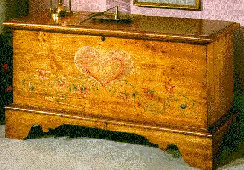
the history of the lane cedar chest
Remember seeing that old cedar chest in Grandma’s house when you were growing up. Well aside
from being a functional piece of antique furniture, chests have a rich history from earliest times as storage containers. Some
of the earliest chests have their history with the amazing pharaoh’s of Ancient Egypt, where they were used to store golden treasures
as well as the documents of the time. In modern times however, one of the largest and best known manufacturer of cedar chests
was the Lane Furniture Company.

Edward Hudson Lane first founded the company in
In the 1920’s, Lane, whose tag line had been, “The gift that starts the home,” began advertising their cedar chests as “Hope Chests,”
where young ladies could stockpile clothing and small furnishings in anticipation of a future marriage. Many of the advertisements
at the time featured soldiers with their betrothed and other patriotic gestures. Later, Lane became known for and is still known
for their quality furnishings and accent pieces.


UPCOMING ANTIQUES SHOWS & FLEA MARKETS
NOVA-Antiques.com & The NOVA-Antiques.com Newsletter provide and extensive list of upcoming antiques flea markets and shows.

record auction price - rooster weather vane

DUMB MIKEY
One year, Mikey’s mom came to his house for the traditional Thanksgiving feast. Knowing how dumb Mikey is, his mother decided to play a trick on him. She told him she needed something from the store and off Mikey went. While he was gone, his mom took the turkey out of the oven, removed the stuffing, inserted a Cornish hen into the turkey, and then re-stuffed it. Later, when it was time for dinner, she asked Mikey to pull the turkey out of the oven and carve it.



netsuke
Japanese artists starting in the 17th century cleverly invented the miniature sculptures known as netsuke to serve a very practical function. Traditional Japanese garments - robes called kosode and kimono - had no pockets. Men who wore them needed a place to keep personal belongings such as pipes, tobacco, money, seals, or medicines.
The elegant solution was to place such objects in containers (called sagemono) hung by cords from the robes' sash (obi). The containers might take the form of a pouch or a small woven basket, but the most popular were beautifully crafted boxes (inro), which were held shut by ojime, sliding beads on cords. Whatever the form of the container, the fastener that secured its cord at the top of the sash was a carved, button-like toggle called a netsuke.

UPCOMING estate & tag sales . . .

Finally . . .
Thank you for your continued support and readership. Please insure to forward this Newsletter to your friends and neighbors. If you no longer wish to receive our emails regarding the update of this page, please send us an email to info@nova-antqiues.com with the subject line "OPT OUT"
NOVA-Antiques.com does not run, manage or operate any of the flea markets, auction houses or estate sale companies represented on this page. The NOVA-Antiques Newsletter is published for the exclusive use, enjoyment and convenience of our readers and subscribers. Any questions regarding the flea markets, auction houses and estate sale companies should be directed to the appropriate owner, promoter or manager.

Collectors, dealers, bargain hunters, tourist and artists all come together every weekend for the Hell’s Kitchen Antiques and Collectibles
flea market in
hell's kitchen antique flea market in new york
Dumb Mikey, always wanting to please him mommy was anxious and excited to be able to do this. He pulled the turkey out of the oven and removed the stuffing. Next, he reached in and to his surprise pulled out the smaller bird. His mother looked at him and exclaimed, “Mikey, you’ve cooked a pregnant bird!” Mikey was mortified and started to sob . . . never realizing that turkeys don’t get pregnant . . . they lay eggs.
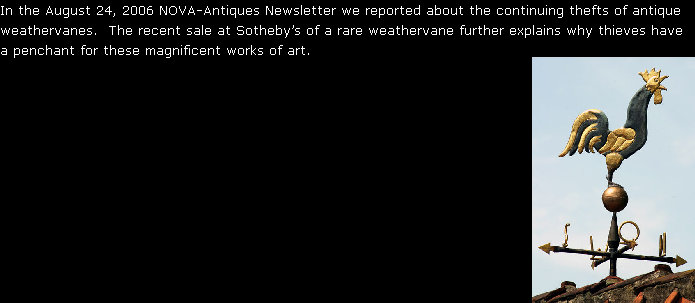
Jerry Lauren of the Polo Ralph Lauren Corp. and his wife Susan recently paid $5.8 million for a rare molded copper Indian Chief weathervane,
setting a record for the sale of an American folk art piece. The weathervane originally adorned the roof of a farmhouse in
The weathervane, which measured over
5’ tall, was produced by J.L. Mott Ironworks Company (circa 1900), which also produced the iron for the
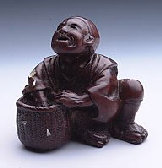
Such objects, often of great artistic merit, have a long history reflecting important aspects of Japanese folklore and life. Netsuke
production was most popular during the Edo period in


